Positive Selection Targeted Primate Genes that Encode Transposable Element Repressors
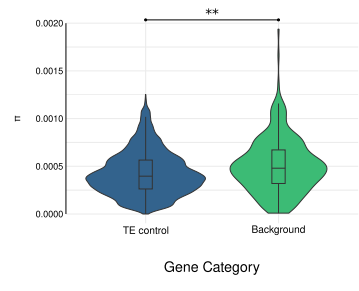
Transposable element (TE) mobilization poses a significant fitness challenge to host genomes. Consequently, a variety of systems have emerged to silence TE activity. Just like TEs, such systems are widespread and their evolution is expected to be shaped by intra-genomic conflicts. To test this hypothesis, we performed an evolutionary analysis of TE control systems across different timescales. We show that a substantial fraction of TE control genes were targets of positive selection during primate evolution, with several proteins of the piRNA-pathway showing a considerable number of positively selected sites. In these proteins, selection was strongest in intrinsically disordered regions (IDRs), particularly those with low conformational entropy. We suggest that positive selection modulates IDR properties by introducing changes in sequence patterns and ensemble features properties, which are in turn related to function. Analysis of genetic data from 54 human populations detected several signals of strong positive selection at TE control genes. In line with findings in primates, we identified as selection targets three genes (TEX15, GTSF1, and GTSF1L) that participate in the piRNA pathway. Additionally, 4 of the 13 genes with strong evidence of positive selection encode components of the NuRD complex, which plays central functions not only related to TE control but also to the maintenance of genome integrity and cell cycle control. Our data provide insight into the evolution of TE control systems in primates and human populations. Whereas the signatures we detected are consistent with a genomic conflict between TEs and their repressors, additional pressures may drive the evolution of the genes we analyzed.
The study is available here.